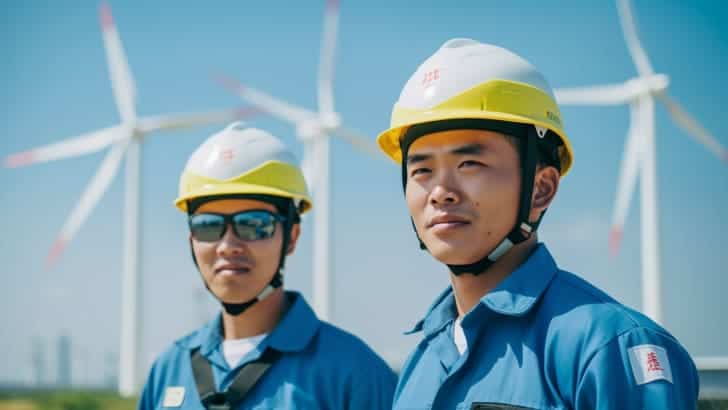
- Singapore receives Conditional Approval to import 1.2GW of low-carbon wind electricity from Vietnam by 2035, a major step forward in the energy cooperation between both countries.
- The imported electricity, primarily sourced from offshore wind power, will be transmitted through 1,000km of new subsea cables.
- Such projects are in line with Singapore’s robust energy transition strategy, aiming for net zero emissions by 2050.
Remember when buying electricity meant a ‘simple trip’ to the local power station?
Times have changed. Now, we’re looking at importing electricity.
And not just from any source but from our Southeast Asian neighbour, Vietnam.
This isn’t your regular power transfer, folks.
It’s an ambitious leap towards a sustainable power supply and a greener future.
A Brave New World of Eco-Friendly Electricity Import
According to the Energy Market Authority (EMA), Sembcorp Utilities got the green light to bring 1.2GW of low-carbon electricity from Vietnam over to our sunny island.
Cool, right? But that’s not the exciting part.
This electricity will be wind-born.
Yes, you heard it right. Wind.
More specifically, from offshore wind electricity.
Possibly, other sustainable sources might join in too.
It’s a collaborative project with Petrovietnam Technical Services Corporation.
Long story short, we’re setting up a 1,000km subsea cable to carry this power from Vietnam.
Through the sea, under the waves, right here to our plugs in Singapore.
Sustainable Electricity Importation: What It Means for Us
The project isn’t just a business deal.
It represents Singapore’s commitment to reducing carbon emissions, particularly in the power sector.
We’re targeting net zero emissions by 2050.
This move is a crucial piece in that big, green puzzle.
It’s part of an MOU signed between Vietnam and Singapore last October.
Both countries have pledged to shake hands in the clean energy transition and cross-border electricity trading.
But, what about supply disruptions?
Can we rely on this kind of arrangement? Good questions.
To ensure that we don’t get left in the dark, there are precautions.
The EMA is working closely with importers to put sufficient safeguards in place against outages.
They’re exploring other low-carbon alternatives like geothermal, hydrogen, and even carbon capture and storage technology.
The Future of Singapore’s Energy Strategy
By 2035, we plan to import up to 4GW of low-carbon electricity.
Projects with Indonesia, Cambodia, and Vietnam are making it happen.
A mix of solar power, hydropower, and wind power is the magic recipe.
It’s the synonym of progress.
We’re toeing the line of green energy import and low emission electricity trade.
And it’s all made possible by a Conditional Approval process, a method outlined by the EMA.
So, what’s next? We’re not stopping at wind electricity.
Vietnam is ripe with potential green energy sources, and Singapore is eager to tap into them.
Come 2030, we expect to start importing energy from our ASEAN neighbour.
We’re in the age of green power supplies import.
As the world moves towards reducing the impact on our planet, Singapore and Vietnam are setting an example for the rest.
Here’s to a future of carbon-free power import and echo-friendly electricity transfer.
And all on the wings of the wind.
Wrapping Up
This new green chapter marks a significant milestone for Singapore and Vietnam.
Both countries share a vision towards a cleaner, safer environment, ready to explore the potential of renewable energy export.
They’re not just neighbours by geography but by shared goals and values.
And who knows what the wind electricity will bring next?
What other renewable energy sources do you think we could harness in our region?
Let’s keep the conversation going on Vietnam’s wind electricity in the comments below.