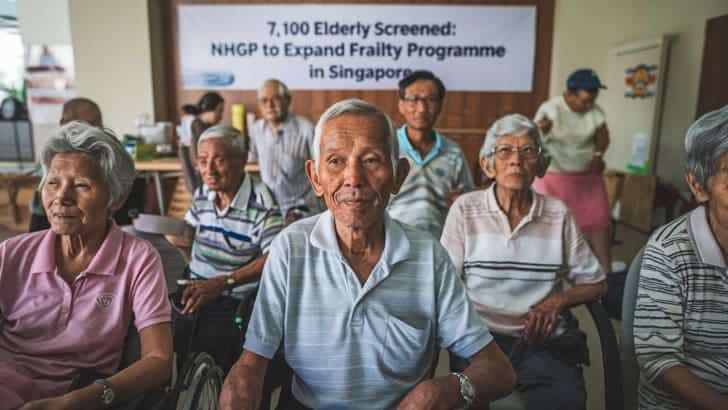
7,100 Elderly Screened: NHGP to Expand New Frailty Programme
A new healthcare programme is helping thousands of elderly Singaporeans avoid frailty through exercise, diet, and medication reviews at polyclinics.
D
Daily.SG Newsroom
Archive · 25 Oct 2024
Image: Daily.SG Archive / Daily.SG
SHARE
SHARE
KEY POINTS
●Over 7,100 elderly patients have been screened since November 2020, with nearly 3,600 receiving targeted interventions.
●The programme uses exercises, high-protein diets, and medication reviews to prevent and manage frailty in patients aged 65 and above.
●Results show 48% of early-stage frail patients and 31% of mildly frail patients improved their hand grip strength after 12 months.
●By 2030, one in four Singaporeans will be 65 or older—about 900,000 seniors, up from 510,000 in 2017.
●All polyclinics in the central region will have the programme by end of 2025.
IN SIMPLE TERMS
Frailty is a condition that makes older people weak, more likely to fall, and less able to do everyday tasks. A new programme at polyclinics screens seniors and gives them exercises, better nutrition, and medicine reviews to keep them strong and healthy.
WHY IT MATTERS
Singapore's elderly population is growing rapidly, making frailty prevention increasingly urgent.
Improved hand grip strength and physical function reduce fall risk and hospitalisation rates in older adults.
Early intervention in primary care settings like polyclinics is more effective and accessible than hospital-based treatment.
Addressing frailty early helps seniors maintain independence and quality of life longer.
The programme aims to help older people stay healthy and strong.
It focuses on patients who are 65 years old and above.
These patients have a Clinical Frailty Scale score of 3 (Managing Well) or 4 (Living With Very Mild Frailty).
Dr Karen Ng, CEO of NHGP, said, “As Singapore’s ageing population continues to grow, frailty will be an increasing challenge, impacting the quality of life among the elderly.”
Why Frailty Matters
Frailty is a big problem for older people in Singapore.
It can make them fall more, go to the hospital often, and have trouble doing daily tasks.
By 2030, one in four Singaporeans will be 65 or older.
That’s about 900,000 seniors, up from 510,000 in 2017.
A study from April to December 2019 found that at least 30% of seniors were pre-frail and 5% were frail.
Year
Number of Seniors (65 and above)
2017
510,000
2030 (Projected)
Over 900,000
How the Programme Works
The Frailty Programme uses a team of different health experts to help patients.
They use exercises and high-protein diets to manage frailty.
These methods work best in primary care settings like polyclinics.
From November 2020 to September 2024, the programme screened over 7,100 patients.
Nearly 3,600 of these patients got special help to improve their health.
Positive Results
The programme is showing good results for patients.
After 12 months, 48% of CFS 3 patients and 31% of CFS 4 patients had stronger hand grips.
Stronger hand grips mean these patients might live longer.
Dr David Ng, a Family Physician at NHGP, said, “Through the collaborative efforts of the multi-disciplinary team, we have successfully improved frailty outcomes of these patients.”
Community Exercise and Medication Review
The programme helps patients join Community Exercise Programmes.
These exercises are chosen based on what patients like and their CFS scores.
Clinical pharmacists also check the medicines older patients take.
This helps reduce the risk of problems from taking too many medicines.
These efforts are part of Singapore’s wider plan for healthy aging and better care for seniors.
Future Plans
By the end of 2025, all NHGP polyclinics in the central region will have this Frailty Programme.
This will help more older people stay healthy and active.
The programme is part of a bigger plan to help Singapore’s aging population.
It shows how Singapore is working to improve senior-friendly healthcare services.
Professor Joe Sim, Group CEO of National Healthcare Group, said, “This Frailty Programme demonstrates NHG’s commitment to addressing the healthcare needs of Singapore’s ageing population by offering proactive, primary care interventions early.”
Do you think more healthcare programmes should focus on preventing health issues in older adults before they become serious problems?