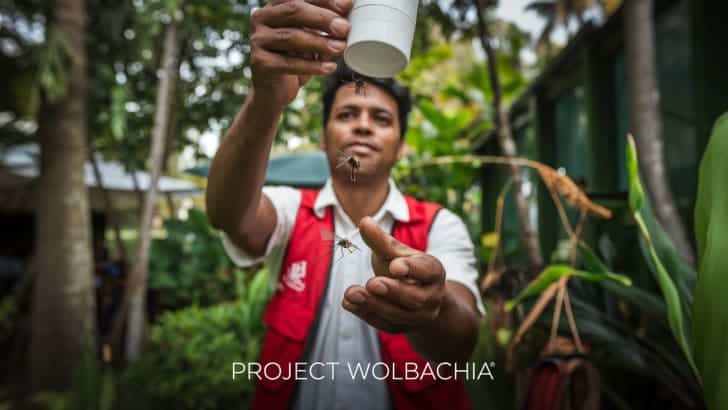
Dengue-Fighting Mosquitoes Coming to More Singapore Homes
Singapore is expanding Project Wolbachia to five new neighborhoods, releasing dengue-fighting mosquitoes to 580,000 households by 2025.

KEY POINTS
IN SIMPLE TERMS
Singapore is releasing special male mosquitoes infected with Wolbachia bacteria in more neighborhoods. These mosquitoes mate with disease-carrying females, but their eggs don't hatch, which reduces dengue cases. The project is spreading to five new areas starting October 2024.
WHY IT MATTERS
WHERE DO YOU STAND?
Should Singapore prioritize the rapid expansion of Project Wolbachia to all neighborhoods, even if it requires sustained resident participation in home checks?
👍 👎 Vote ↓Singapore’s fight against dengue takes a big step forward with Project Wolbachia’s expansion.
On 3 October 2024, Ms Grace Fu, Minister for Sustainability and the Environment, announced big news about Project Wolbachia.
The project will grow to cover five more areas in Singapore.
This expansion will start in October 2024.
It will reach more homes, going from 480,000 to 580,000 households.
The National Environment Agency (NEA) shared details about where and when the project will expand.
Here’s the plan for the new sites:
NEA will release special male Wolbachia-Aedes mosquitoes in these areas twice a week.
They will do this in the mornings.
Project Wolbachia uses a clever way to fight dengue.
It releases male mosquitoes that have Wolbachia bacteria.
These males mate with female Aedes aegypti mosquitoes.
The eggs from this mating don’t hatch.
This helps reduce the number of mosquitoes that can spread dengue.
According to NEA, the project has shown great results.
Ms Grace Fu stated, “Residents living in these sites are about 75 per cent less likely to be infected with dengue.”
This means the project really helps keep people safe from dengue.
The study also found that Aedes aegypti mosquito numbers dropped by 80-90%.
This is a big win in the fight against mosquitoes and dengue.
NEA stressed that everyone needs to help for the project to work well.
They said, “A positive outcome is only possible with the sustained vigilance of the community.”
This means people need to keep doing their part to stop mosquitoes from breeding.
Residents should check for standing water in their homes and gardens.
They should also let NEA staff do their work when they visit.
NEA has a smart way to check if the project is working.
They use something called a Gravitrap system.
These traps are placed all over Singapore.
They help count how many mosquitoes are in an area.
NEA said, “The number of Wolbachia-Aedes mosquito releases will be adjusted according to the abundance of Aedes aegypti population.”
This means they’ll release more or fewer mosquitoes based on what they find.
Project Wolbachia isn’t just NEA’s work.
Many groups are helping:
| Group | Role |
|---|---|
| Ministry of Health (MOH) | Helps with health aspects |
| Nanyang Technological University (NTU) | Provides research support |
| National University of Singapore (NUS) | Also helps with research |
| Dengue Expert Advisory Panel (DEAP) | Gives advice on the project |
This teamwork shows how important the project is for Singapore.
If you live in one of the new project areas, here’s what to expect:
Remember, even with this project, it’s still important to prevent mosquito breeding at home.
Project Wolbachia is a big step in Singapore’s efforts to keep everyone healthy.
It shows how science can help solve health problems.
As the project grows, it could make Singapore safer from dengue.
By working together, Singapore hopes to win the fight against dengue and create a healthier future for everyone.
Should Singapore prioritize the rapid expansion of Project Wolbachia to all neighborhoods, even if it requires sustained resident participation in home checks?
Be the first to weigh in.