Earn Your Degree Bit by Bit: New SIT Stackable Degree
SIT launches a new stackable degree pathway that lets students earn engineering qualifications by completing short micro-credentials over time, starting from September 2024.
D
Daily.SG Newsroom
Archive · 4 Oct 2024
Image: Daily.SG Archive / Daily.SG
SHARE
SHARE
KEY POINTS
●SIT's Competency-based Stackable Micro-credential (CSM) pathway allows students to earn engineering degrees in Infrastructure and Systems Engineering or Electrical and Electronic Engineering by completing short courses over time.
●Each micro-credential takes about four months to complete, with students having five years to stack them towards a degree.
●The programme recognises prior learning and work experience, potentially granting credits or exemptions to students.
●Both degree pathways focus on sustainability and align with Singapore's Green Plan 2030, preparing graduates for areas like renewable energy and smart infrastructure.
●SIT provides each student with a success coach to help balance study with work and personal goals.
IN SIMPLE TERMS
Instead of doing a traditional full-time degree all at once, you can now earn an engineering degree from SIT by taking short focused courses (called micro-credentials) over several years, fitting study around your work. Each course takes about four months and teaches a specific skill, and you can stack them together to get a full degree.
WHY IT MATTERS
Addresses Singapore's rising demand for engineers and supports the nation's urbanisation and digital transformation goals.
Enables working professionals and older learners to upgrade their skills without leaving their jobs.
Keeps engineers competitive by enabling continuous learning in response to rapid technological change and emerging fields like AI and IoT.
Prepares graduates for sustainability-focused careers in renewable energy and smart infrastructure aligned with Singapore's Green Plan 2030.
This new pathway is called the Competency-based Stackable Micro-credential (CSM).
It started in September 2024.
Students can earn degrees in Infrastructure and Systems Engineering (ISE) or Electrical and Electronic Engineering (EEE).
How the Competency-based Stackable Micro-credential (CSM) Pathway Works
The CSM pathway lets students learn at their own pace.
This is good for working professionals who want to study.
Students take short courses called micro-credentials.
Each micro-credential takes about four months to complete.
Students have five years to use these micro-credentials towards their degree.
First Three Micro-credentials
Start Date
Data Analytics
September 2024
Electronics Systems
September 2024
Engineering Design and Solutioning
September 2024
Who Can Benefit from This Programme
The CSM pathway is not just for young students.
It’s also for professionals who want to upgrade their skills.
According to SIT, the programme recognises prior learning and work experience.
This means students might get credits or exemptions for what they already know.
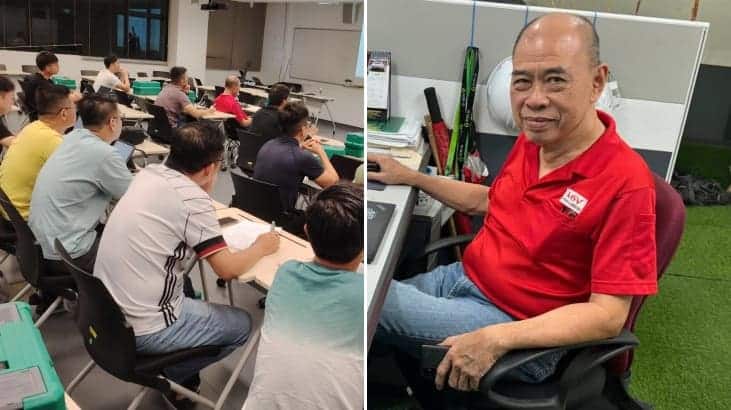
Patrick Tan, a 47-year-old Senior Engineer at SBS Transit, said, “The flexibility of the ISE programme enables me to advance my engineering knowledge at my own pace.”
Support for Students
SIT provides a success coach for each student.
The coach helps with setting academic and personal goals.
They also provide extra resources and motivation.
This support system helps students balance work and study.
Focus on Sustainability
Both the ISE and EEE programmes focus on sustainability.
They align with the Singapore Green Plan 2030.
Graduates can work in areas like renewable energy and smart infrastructure.
These areas are important for Singapore’s future economy.
Why This Programme Matters
Professor John Thong, Deputy President (Academic) and Provost at SIT, explained why this programme is important.
He said, “The rapid technological advancements in the engineering landscape and the increasing complexity of global challenges necessitate a continuous learning mindset for engineers to stay relevant and competitive.”
This means engineers need to keep learning to stay up-to-date.