GreenGovSG: Public Sector Cuts Emissions in FY2023
Singapore's public sector cut carbon emissions by 0.2% in FY2023 and aims to hit net zero by 2045, five years ahead of the national target.
D
Daily.SG Newsroom
Archive · 18 Nov 2024
Image: Daily.SG Archive / Daily.SG
SHARE
SHARE
KEY POINTS
●Public sector emissions fell 0.2% to 3.6 million tonnes of carbon dioxide equivalent in FY2023, though electricity use rose 1.5%
●The GreenGov.SG report now includes waste data for the first time, showing 218.7 million kilograms generated
●Government targets net zero by 2045 and aims to cut energy and water use by 10% and waste by 30% by 2030
●Economic growth and new infrastructure like train lines and healthcare facilities are making emissions reduction harder
●Statutory Boards will start publishing annual sustainability disclosures from FY2024 onwards
IN SIMPLE TERMS
The Singapore government released a report showing how much energy, water, and waste its offices and facilities used over the past year. They cut their carbon emissions slightly and want to reach net zero emissions by 2045. The report now tracks waste for the first time.
WHY IT MATTERS
The public sector is setting an emissions reduction target five years ahead of Singapore's national 2050 net zero goal.
Government sustainability efforts model practices that other organisations in Singapore can learn from and adopt.
Expanded reporting now includes waste data, giving a fuller picture of public sector resource consumption.
Transparency in sustainability reporting is expected to encourage businesses and organisations to improve their own environmental practices.
Singapore’s public sector reduced carbon emissions by 0.2% in FY2023.
The GreenGovSG report now includes waste data for the first time.
Public sector aims to achieve net zero emissions by 2045.
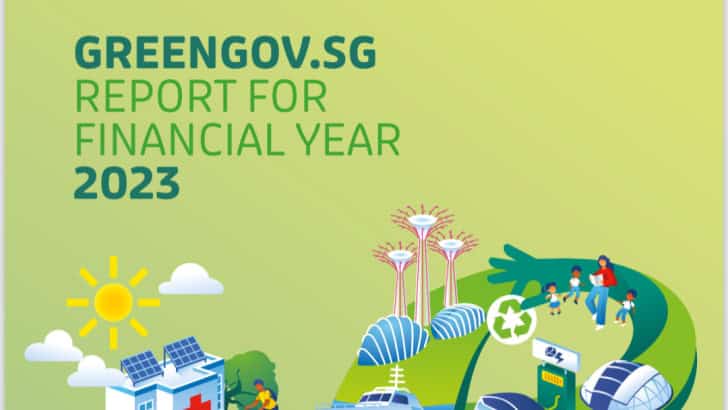
Singapore’s government is making strides in sustainability, as revealed in the latest GreenGov.SG report for FY2023.
Key Terms Simplified
Carbon dioxide equivalent is a way to measure how much a gas warms up the Earth, compared to carbon dioxide.
Net zero emissions means not adding any more harmful gases to the air than we can remove.
Singapore’s Green Government Efforts
According to MSE, the Ministry of Sustainability and the Environment (MSE) has shared the GreenGov.SG report for FY2023.
This report shows how green Singapore’s public sector was from 1 April 2023 to 31 March 2024.
For the first time, the report includes data on waste.
The report covers different types of government buildings to show how they use resources.
Key Findings of the Report
The public sector released about 3.6 million tonnes of carbon dioxide equivalent in FY2023.
This is 0.2% less than in FY2022.
The government used 5,449 GWh of electricity in FY2023.
This is 1.5% more than in FY2022.
Resource
FY2023 Usage
Change from FY2022
Water
33.4 billion litres
0.4% decrease
Waste
218.7 million kilograms
1.3% increase
Government’s Green Goals
The public sector wants to reach net zero emissions by around 2045.
This is five years earlier than Singapore’s national target of 2050.
The government also aims to cut energy and water use by 10% by 2030.
It wants to reduce waste by 30% in the same period.
Challenges and Strategies
Mr Lim Tuang Liang, the Government Chief Sustainability Officer, said, “We are appreciative of those who have provided us with feedback following the publication of our inaugural GreenGov.SG report last year.”
The report shows that as Singapore’s economy grows, it’s harder to reduce emissions.
New train lines and healthcare facilities have increased energy use.
The government is working on ways to use less single-use items.
They are also trying to reuse materials and recycle more.
Sustainability Reporting Journey
Mr Lim also stated, “We will continue to learn from others and refine our reporting, as sustainability reporting is a continuous journey of improvement.”
This shows the government’s commitment to getting better at reporting on sustainability.
The full FY2023 GreenGovSG report is available online for the public to read.
Mr Lim highlighted, “Through the features of various sustainability initiatives in our report, we have also shared some of our learning points and hope these are useful for businesses and organisations on their sustainability journey.”
This sharing of experiences can help other organisations in Singapore improve their own sustainability efforts.
The report provides insights on greenhouse gas emissions
It covers energy consumption and water use
Waste disposal data is now included
The report covers various public sector assets in Singapore
Do you think the Singapore government’s green efforts will inspire more businesses to adopt sustainable practices?