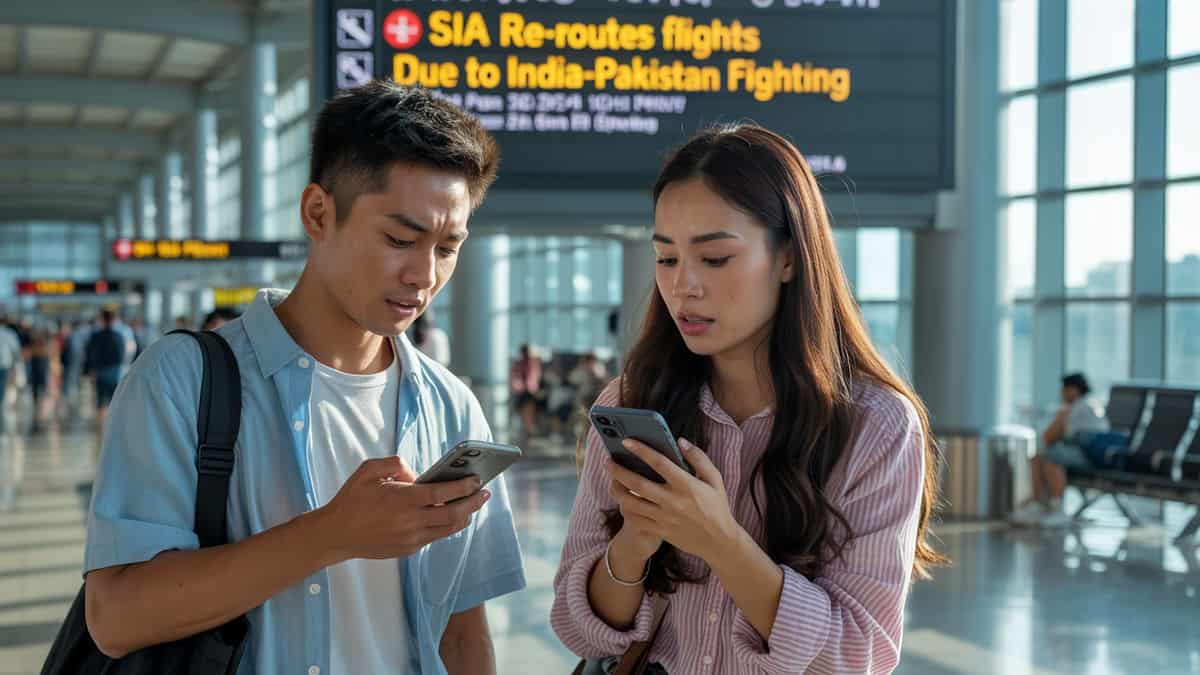
Asian Airlines Scramble to Reroute as India-Pakistan Conflict Soars
Asian airlines are scrambling to reroute flights and avoid Pakistani airspace as India-Pakistan military tensions escalate to their worst level in over two decades.
D
Daily.SG Newsroom
Archive · 7 May 2025
Image: Daily.SG Archive / Daily.SG
SHARE
SHARE
KEY POINTS
●Singapore Airlines and Scoot have stopped using Pakistani airspace since 6 May; over 50 flights were cancelled by Wednesday and more than two dozen diverted
●India launched Operation Sindoor, firing missiles at terrorist camps in Pakistan; Pakistan claimed to have shot down five Indian fighter jets in response
●Multiple Asian carriers including Malaysian, Korean, Thai, Vietnamese, and Taiwanese airlines have rerouted or cancelled flights to Europe and South Asia
●Airlines face longer flight times and operational costs; stock prices of some carriers have dropped as a result
●The aviation industry warns of critical safety risks including GPS spoofing that could interfere with flight operations over conflict zones
IN SIMPLE TERMS
India and Pakistan are in a serious military conflict, and airlines flying over that region are changing their routes to keep passengers safe. This is causing flights to take longer, get cancelled, or rerouted to different paths.
WHY IT MATTERS
Travellers face flight cancellations, longer journey times, and rerouted bookings affecting plans to or from the region.
Airlines are suffering financial losses through operational disruption and falling stock valuations amid the crisis.
The aviation sector confronts safety hazards like GPS spoofing that threaten flight safety in conflict zones.
Regional air connectivity across Asia, the Middle East, and Europe is disrupted by the need to avoid Pakistani airspace.
Asian airlines reroute flights due to India-Pakistan conflict.
Singapore Airlines and Scoot avoid Pakistani airspace.
Flight disruptions and cancellations across multiple carriers.
The escalating conflict between India and Pakistan has caused significant disruptions to air travel across Asia, with airlines scrambling to reroute flights and ensure passenger safety.
As of 7 May 2025, the aviation industry is grappling with a major crisis.
The ongoing conflict between India and Pakistan has forced airlines to make urgent changes to their flight paths.
According to Channel NewsAsia, this is the worst fighting between the two countries in over two decades.
Airline Actions and Flight Path Changes
Singapore Airlines (SIA) and Scoot have taken immediate action to ensure passenger safety.
Both airlines are now avoiding Pakistani airspace entirely.
These changes have been in effect since Tuesday, 6 May.
An SIA spokesperson explained the potential impact on travel times:
“This may result in slightly longer flight times for some flights…”
SIA and Scoot have pledged to assist affected customers by accommodating them on alternative flights if necessary.
India-Pakistan Conflict Details
The root cause of these disruptions is a military operation launched by India.
On Wednesday, India initiated Operation Sindoor, firing missiles at terrorist camps in Pakistan.
In response, Islamabad claimed to have shot down five Indian fighter jets.
This escalation follows an attack on Hindu tourists in Indian Kashmir last month.
Airline Flight Disruptions and Cancellations
The impact on air travel has been significant and widespread.
More than two dozen commercial flights were diverted to avoid Pakistani airspace.
By Wednesday morning, airlines had cancelled 52 flights to or from Pakistan, according to FlightRadar24.
At the time of India’s strike, 57 international flights were operating in Pakistan’s airspace.
Domestic flights in both countries have also been disrupted, with India shutting several airports.
Asian Airlines Rerouting and Cancellations
Multiple airlines across Asia have been forced to adjust their operations:
Air India, IndiGo, SpiceJet, and Akasa Air cancelled flights
Malaysia Airlines rerouted two flights from Kuala Lumpur to London and Paris
Korean Air began rerouting its Seoul Incheon-Dubai flights
Thai Airways announced rerouting of flights to Europe and South Asia
Vietnam Airlines reported that the tensions affected its flight plans
According to Reuters, Taiwan’s EVA Air has made significant adjustments to its European routes:
“One flight from Vienna will be diverted back to that city, while a flight from Taipei to Milan will be diverted to Vienna for refuelling before continuing on to its destination…”
These changes highlight the complexity of ensuring airline safety during international conflicts.
Impact on Regions and Airlines
The changing airline schedules are complicating operations in the Middle East and South Asia.
Carriers are already dealing with existing conflicts in these regions.
The financial impact is also becoming apparent, with IndiGo shares down 1.8 per cent and Taiwan’s China Airlines shares down more than 2 per cent.
Safety Concerns and Industry Response
According to CNA, The Association of Asia Pacific Airlines has voiced serious concerns about the situation.
They highlighted a critical safety issue:
“Apart from cost and operational disruption, there are safety concerns as GPS spoofing interfering with flight operations over conflict zones is one of highest risks the industry faces…”
GPS spoofing can potentially send airliners off course, posing a significant threat to air travel safety.
Do you think airlines are doing enough to ensure passenger safety during international conflicts?